Snap! Mobile
- 3.0
- Rating
- 100.00K
- Installs
- Free
- Price

 Analysis by App-foxy
I found Snap! Mobile most interesting when I stopped thinking of it as a personal sports app and looked at it as a shared tool for athletics and activities. In a household, one person may be following a child’s team, another may be helping with schedules, and someone else may simply want to stay connected without taking over the athlete’s account. That is the kind of situation where a platform like this can make sense, although it also demands a little care about who is signed in and what information is being viewed.
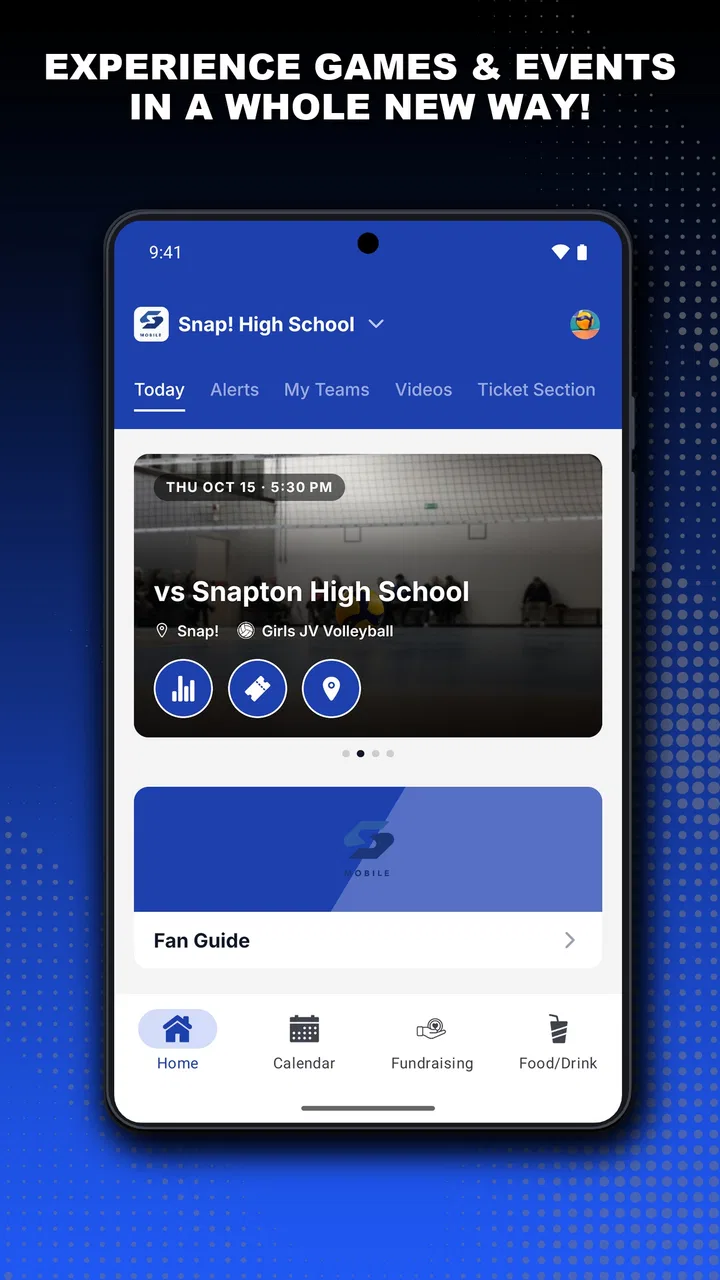
Developed by Snap! Mobile Inc, this free sports app is aimed at bringing activity-related information into one place. Its Everyone content rating makes it approachable for a broad household audience, but that label should not be confused with a guarantee that every part of a shared account arrangement will suit every family. My experience with apps in this category is that the practical value often depends less on the download itself and more on how clearly a household separates personal access from shared coordination.
How Snap! Mobile fits into a shared household
The most realistic use case is a home where athletics are part of the weekly routine. Imagine a parent checking activity information before leaving work, an athlete looking at the same platform later, and another family member needing enough context to help with transport or preparation. Instead of passing around screenshots or relying on one person to remember every detail, a dedicated sports platform can become a common reference point.
You May Also Like

 Pandora - Music & Podcasts
Pandora’s Music Is Easy to Start, but Harder to Recover
Pandora’s strength is its low-effort path from a seed to a station. Its weak spot is how much confidence it asks you to place in connection, setup, and quiet recovery.

 8 Ball Pool
 Is Built on Rivalries, Rematches, and Routine
A close look at the rivalries, rematches, shared routines, and unanswered safety questions that turn a quick pool match into a persistent mobile community.

 Samsung Music
’s Quiet Strength Is Playing What You Already Own
Its reach comes less from spectacle than from dependable access to a personal library. That simplicity is both the app’s strongest retention engine and its ceiling.

 AccuWeather: Weather Radar
AccuWeather Review: A Quick, Clear Forecast for Everyday Decisions
For everyday plans, the best forecast is the one you can understand quickly. AccuWeather makes rain timing, radar, and local conditions easy to act on, with a few trade-offs.

 Hill Climb Racing
Why Hill Climb Racing Still Turns Crashes Into One More Run
A tiny car, a bumpy hill and one more upgrade: Hill Climb Racing keeps resurfacing because its simple chaos makes every near-miss feel personal.

 AliExpress - Shopping App
AliExpress Makes Global Shopping Feel Personal, but Shoppers Bear the Risk
AliExpress turns a global marketplace into a pocket-sized discovery engine. Its reach is useful, its shopping loop compelling, and its trade-offs easy to miss.
More From Our News Desk
View All News


That does not mean every household member needs identical access. In fact, I would avoid treating a shared phone or tablet as if it were automatically a shared account. The device may belong to the family, while the information inside the app may relate to one athlete, one activity group, or one adult’s responsibilities. Keeping those ideas separate is the first useful habit to establish.
For a teenager who manages their own device, the app can be a straightforward way to stay connected with athletics. For a younger child, an adult will probably remain involved in the practical side of setup and daily checking. The app’s age rating makes it suitable for general audiences, but families should still decide which person handles account details and which person only needs to view activity information.
I also see value for households with uneven schedules. One adult may handle morning routines while another manages afternoon pickup. A sports-focused platform can reduce the need for repeated messages, provided everyone is looking at the same current information and understands which account belongs to whom. That last condition matters more than it sounds: confusion often comes from shared credentials, not from the app’s basic purpose.
Start with a clear device and account boundary
My strongest setup recommendation is simple: decide whether the app is being installed for one athlete, one adult coordinator, or a genuinely shared household device. Do this before entering information. If several people use the same phone or tablet, avoid leaving the app open under one person’s account when another person is likely to pick up the device.
A shared device can be convenient in the kitchen or living room, but convenience has a trade-off. It makes quick checking easier while making accidental exposure more likely. A child may open the app while another family member’s session is still active, or an adult may unintentionally change something while trying to find information. I would treat the household device as a viewing point, not as proof that everyone should use one login.
On a personal device, the boundary is easier to maintain. The athlete can use the app for their own routine, while an adult keeps separate access for coordination if needed. This arrangement also makes it easier to identify which person is responsible for checking updates and which person is only receiving information secondhand.
Before the first busy week, I would spend a few minutes confirming the basics: whose account is open, which athlete or activity the information concerns, and who should be contacted if something looks wrong. This is not glamorous setup work, but it prevents the most common household mistake: assuming that the person holding the device is automatically viewing the right context.
Another useful habit is to avoid making the app the only place where an important plan exists. If an activity affects transport, meals, schoolwork, or another commitment, I would copy the relevant practical detail into the household’s normal planning method. That might be a calendar, a written note, or a family message. Snap! Mobile can support coordination, but a sports app should not become the sole memory system for the entire home.
Using it for coordination without creating more messages
The best shared-use workflow is one that reduces repetition. Instead of asking the same person several times what is happening with an activity, household members can first check the app and then ask a focused question if something still needs clarification. That changes the conversation from “What is going on?” to “I saw the activity information; do you still need a ride?”
This works especially well when one person acts as the household coordinator. That person does not need to control everyone else’s use. Their role can simply be to check the relevant information at a sensible time, compare it with the family’s schedule, and flag conflicts early. The athlete still remains the person closest to their own participation, while the adult handles practical support.
I would not recommend constant checking. Sports information can become a source of unnecessary anxiety when family members refresh repeatedly or treat every change as an emergency. A better approach is to establish a routine: check before leaving home, check again when a decision about transport or equipment is needed, and avoid turning the app into a background monitor.
There is also a useful distinction between coordination and supervision. Coordination means helping someone get where they need to be and making sure the household understands the plan. Supervision means watching every action or using the app as a substitute for conversation. Snap! Mobile is more appropriate for the first purpose. Families should not assume that installing a sports platform creates special oversight tools or replaces direct communication.
For a shared tablet, I would keep the workflow deliberately narrow. Open the app when the family needs activity information, check the relevant screen, and close it afterward. This reduces the chance that the next person sees a stale account session or assumes that the device is ready for their own use. It also gives children a clearer sense that shared technology still needs personal boundaries.
What the age rating means in everyday use
The Everyone rating is reassuring for households looking for a broadly accessible sports app, particularly when several age groups use the same device. Still, age suitability and account responsibility are different questions. A child may be able to use the app comfortably while an adult remains responsible for deciding what information is shared, which device is used, and how the app fits into the family routine.
I would explain the arrangement to younger users in plain language: this app helps with athletics and activities, but it is not a private diary and it is not a replacement for asking an adult when something is unclear. That conversation is more useful than simply handing over a device with the app already open.
Trust matters on both sides. Adults should not assume that a young athlete understands every account boundary, and young users should not be expected to manage household coordination alone. If the app is being used by more than one person, everyone should know whose information they are viewing and who is responsible for acting on it.
For older children and teenagers, I would give them more ownership while keeping the household agreement visible. They may be perfectly capable of checking their own activity information, but they may still need help when an update affects transport, school, or another family member. The app can support independence without requiring the household to disappear from the process.
This is also where I would be cautious about shared notifications or open screens. Even without assuming any special privacy controls, ordinary device habits still matter. Lock the device when appropriate, close the app after use, and avoid leaving personal activity information visible in a public part of the home. These are small steps, but they make shared use feel more respectful.
Where it feels stronger than ordinary alternatives
Compared with using a general messaging thread, a sports-focused platform has a clearer purpose. A chat can become crowded with unrelated conversations, old screenshots, jokes, and last-minute questions. A dedicated app is easier to consult when the goal is specifically to understand athletics or activities rather than search through a long family conversation.
It can also be more practical than relying only on a paper notice or a verbal reminder. Paper is easy to lose, and verbal information depends on someone remembering it accurately. A digital sports platform gives the household a place to begin checking, which is useful when several people share responsibility.
On the other hand, I would not replace a general calendar with Snap! Mobile for every household task. A calendar is usually better for combining sports with appointments, work shifts, school events, and travel. A family messaging app is often better for a quick question that needs an immediate answer. The sensible approach is to let each tool do the job it handles best instead of forcing one app to become the entire coordination system.
Its value is therefore highest when the household already has a reason to follow athletics or activities and wants a more focused place than ordinary chat. If nobody in the home participates in organized activity, the app is unlikely to justify occupying attention simply because it is free.
Performance expectations and practical friction
Snap! Mobile is listed at an average rating of 3.3 from around seventy ratings, with around thirty written reviews. I read that as a sign to keep expectations measured rather than assuming a universally smooth experience. The app has passed the threshold of over one hundred thousand installs, so it is not an obscure experiment, but popularity alone does not tell me whether it will fit a particular household’s routine.
The current version is 172.21.2, and the minimum operating system is iOS or Android 10. That requirement is reasonable for many modern phones, but it can matter in a shared household where an older spare device is used as the family screen. Before planning around that device, I would check its operating system. If it cannot run the app, the household may need to use a newer phone or tablet, which changes the convenience calculation.
The free price removes one obvious barrier, especially for families that do not want another subscription just to follow activities. Free does not necessarily mean effortless, though. The real cost may be attention: deciding who checks it, keeping accounts separate, and translating activity information into a workable household plan.
I also would not install it on every family device by default. More copies can create more uncertainty about which session is current and who is responsible for checking. One carefully chosen shared device plus personal access for the people who genuinely need it is often cleaner than scattering the app across the entire home.
A realistic evening routine might look like this: one adult checks the activity information after dinner, notices that it affects the next day’s transport, and confirms the plan with the athlete. The family calendar then carries the practical reminder, while the app remains the place to consult when the activity details need checking. That division prevents the sports app from becoming a second, competing calendar.
Who should use it, and who should skip it
I would recommend Snap! Mobile to households already involved in athletics or activities, especially when more than one person needs a reliable point of reference. It is also worth considering for an individual athlete who wants a focused sports platform rather than a general social or messaging app. The free price and Everyone rating make the initial trial relatively approachable.
I would be more cautious for families with very old devices, households that already coordinate perfectly through a calendar, or anyone expecting a complete family-management system. The app’s sports focus is a strength when that is exactly what you need, but it is a limitation when you want broad household planning, detailed task assignment, or one place for every kind of appointment.
I would also skip it as a solution to a trust problem. No app can replace an agreement about who is allowed to view information, who makes decisions, and how a child’s independence should work. Installing a platform without discussing those boundaries can make coordination feel more complicated rather than less.
For a single adult following one activity, the app may be useful if it offers information that is easier to consult there than elsewhere. For a large household with several athletes, the benefit depends on disciplined organization. More participants can make a focused platform more valuable, but they can also make account mix-ups more likely. In that situation, naming a clear coordinator and keeping personal sessions separate becomes essential.
My household verdict
After looking at Snap! Mobile through the lens of shared-device use, I see it as a practical sports companion rather than an all-purpose family organizer. Its strongest role is helping a household keep athletics and activities in view without burying them inside a noisy message thread. The app is free, broadly age-rated, and available on devices running Android or iOS 10 and later, which gives many families a reasonable starting point.
My recommendation is to begin with one clearly defined use case. Install it for a particular athlete or activity, decide who checks it, and agree on how important information becomes part of the wider household plan. Do not assume that everyone needs the same account or that a shared tablet should remain permanently signed in.
The balanced conclusion is simple: Snap! Mobile works best when it supports a clear family routine, not when it is expected to create one by itself. I would try it if athletics already create coordination work at home, while keeping a normal calendar and direct conversation alongside it. If your household has no sports-related need or expects extensive family controls, another type of app will probably be a better match.
For the right home, the app can remove a little friction from busy activity days. Its success will depend less on how many devices have it installed and more on whether everyone understands the boundaries around accounts, age, trust, and responsibility. That is why I would recommend a deliberate setup rather than an automatic download for the whole family.
FAQs for Snap! Mobile
01What is Snap! Mobile and what does it do?
Snap! Mobile is a versatile app designed to enhance your creativity by allowing you to design and program custom applications directly on your mobile device. It offers a visual programming environment where users can create interactive projects, games, and simulations using blocks instead of code. It’s perfect for both beginners and experienced developers looking to experiment with new ideas.
02Is Snap! Mobile suitable for beginners in programming?
Yes, Snap! Mobile is ideal for beginners as it uses a block-based coding system that simplifies the programming process. Users can drag and drop blocks to create their projects, making it an excellent educational tool for those new to coding. The app also provides tutorials and guides to help users understand the basics and gradually progress to more complex projects.
03Can I share my projects created on Snap! Mobile?
Absolutely! Snap! Mobile allows users to share their creations with a community of other users. You can upload your projects to the Snap! community, where others can view, use, and even modify your work. This feature fosters collaboration and learning, as you can explore projects created by others and gain inspiration for your creations.
04What are the system requirements for Snap! Mobile?
Snap! Mobile is compatible with both Android and iOS devices. For Android users, the app requires Android version 6.0 or higher, while iOS users need version 11.0 or later. Ensure your device has sufficient storage space and a stable internet connection to fully utilize all features and access community projects.
05Are there any costs associated with using Snap! Mobile?
Snap! Mobile is free to download and use, offering a wide range of features at no cost. However, there might be optional in-app purchases for additional content or features. These purchases are entirely optional, and users can enjoy creating and sharing projects without any financial commitment.
Pros
- User-friendly interface for easy navigation.
- Supports real-time collaboration features.
- Wide range of customization options.
- Seamless integration with social media.
- Regular updates with new features.
Cons
- Limited offline functionality.
- Occasional in-app purchase prompts.
- Requires a stable internet connection.
- Some features are paywalled.
- Ads can be intrusive at times.

Snap! Mobile
Gallery